• Alternatives to ‘No Contact’

    There’s a trend called No Contact I’ve been watching for the last year or so, in which people consider or choose breaking off communications with their family, or certain family members.  I have many thoughts and feelings on the subject as I continue to think about it and reflect on it. I plan to share more in future essays.  This first one might serve as a brief overview of some of the terrain I’ve covered myself as well as in exploring with hundreds of clients their own painful challenges with family dynamics. 

    I support each person’s choices and what gives them their best sense of autonomy and agency. There are times when creating distance and separation in order to heal from abuse is necessary for healing.  At the same time I’ve seen how that decision might be a part of the longer process of coming to peace, and that there are additional considerations we might not know about without further exploration and guidance through the dimensions of the family soul. 

    In the healing we practice there is an emphasis on seeing one’s self in the larger picture of the family system and the ancestral lineage.  It’s hard to understand the influences of the ancestors’ lives from the limited perspective of the individual self.  It might help to think about the way a hologram works.  An original holographic image is produced using a laser beam split into two parts.  One part- the reference beam- is directed by mirrors onto a photographic plate directly.  The other, called the object beam, is directed onto whatever’s being photographed- let’s say a coffee mug- in a way that scatters the beam so it lands on the same photographic plate while carrying all the information about the mug.  The way the two beams interact on the photographic plate creates an interference pattern.  When a clean reference beam is passed through that plate, the illusion of a three dimensional mug appears floating in space. 

    Here’s the part I find fascinating, and relevant to family healing.  You could break the original plate into pieces, choose any broken piece- whatever the shape and size- and pass the reference laser through it and still recreate the 3-D image of the mug. The difference is, it wouldn’t be as sharp as the image from the original plate.  You’d have to put all the pieces back together to get the clearest picture of the coffee mug.

    In my experience, it’s just the same with us and our part in the family.  We can only see from our place and from a limited understanding until we include in the picture all the lived experiences, memories, loves, struggles, losses, strengths, and healed wounds that reside in the ancestral lineage.  And in almost every case I’ve seen, underneath all of the burdens, somehow, there is love to be found and restored.  I’ll give one personal instance from my life that I didn’t understand until I was in my 40’s.

    I was 15 years old, loved music, and wanted to go to my first rock concert with some of my best friends.  I didn’t need money for the ticket, I just needed permission- and my dad said no.  There wasn’t an explanation.  Just no.  The next summer I took driver’s ed in preparation for getting my driver’s license when I turned 16.  When I did, I asked my dad to take me to the DMV to take the driving test so I could get the license, and he said no again.  He didn’t think I should rush into it.  I shared this disappointment with one of the older guys at my summer job, and he offered to take me on our lunch break.  It felt transgressive, but I was willing to risk the guilt that would come from defying my dad in exchange for the freedom of driving.  Thanks to Mark Chism, I got my license, and I felt like I outsmarted my dad.  It didn’t help our relationship.

    Years later, thanks to Family Constellations training, I came to understand my dad better.  When he was in his 20’s my dad’s older sister Angie died in a car accident.  She had gone on a road trip from Detroit to Florida with friends.  They were driving at night, the driver fell asleep, the car went off the road and rolled over and my Aunt Angie was killed.  She was the first to go to college.  She worked at a law firm and from what my dad and others in the family told me, she was the academic star.  It was expected that she would become a lawyer.  It devastated the family.  The pain of that loss came from the deep love the family had for her, and that love got translated into a fierce protection my dad had for myself and my sisters.  He didn’t want to lose one of us.  As a teenager I only felt anger, frustration and judgement toward my dad, but as an adult, seeing more of the picture, I found compassion and understanding.  

    There’s a risk we may take by trying to separate too fully from the family.  Going no contact may be helpful in the short term by providing relief and the space needed to stabilize and grow.  In my experience, there is further to go and more to explore to help us keep open the heart of compassion and find deeper healing and understanding. 

    [Originally published September 8, 2026]    

  • Conscience and Belonging

    “Whenever conscience acting in the service of belonging binds us to one another in a group, it also drives us to exclude those who are different and to deny them the right to the membership that we claim for ourselves.  Then we become frightening for them.  The conscience guarding our belonging guides us to do to those who are different what we fear as the worst consequence of guilt- we exclude them.  But as we treat them badly in good conscience, so do they in turn treat us in the name of the conscience of their group.  The conscience that guards belonging inhibits evil within the group, but lifts this inhibition in regard to those outside the group.  We then do to others in good conscience what our conscience forbids us to do to members of our own group.”   -from Love’s Hidden Symmetry, by Bert Hellinger

    “Without a global revolution in the sphere of human consciousness, nothing will change for the better in the sphere of our being as humans, and the catastrophe toward which this world is headed – be it ecological, social, demographic, or a general breakdown of civilization – will be unavoidable.”  -Václav Havel

    I’ve been horrified and frightened by increasingly regular accounts of violence and assassination both within the United States, my home country, as well as in other nations, and it was jarring to hear of the attacks in Paris while attending the Family Constellations conference in San Diego two weeks ago.  In our current presidential campaign there have been calls for exclusion and expulsion in order to protect U.S. citizens.  The words of Bert Hellinger, the developer of Family Constellations as it’s now practiced all over the world, and of Vaclav Havel as shared above give me much to consider when I look at what’s been described for many years in the US as a war on terror.

    While considering Hellinger’s ideas of conscience, I’ve come to realize that I’ve held an impression since childhood of conscience being an absolute, universal ruler and guide to behavior, understood the same way by everyone. Formed in my Catholic Sundays listening to readings and teachings from the Bible as well as in catechism classes preparing me for the sacraments, I internalized a message that all people always know the right thing to do; and further, whether or not they do that right thing reveals the quality of their character and soul.  In some respects this may be a helpful way to instruct a young person in his beginning awareness of how one creates relationships.  As an adult living in a much less simplified world, Hellinger’s words resonate more deeply with me now.

    When I traveled to Beirut in September I had an experience at the airport while departing that revealed to me how I unconsciously carry a belief that I don’t find so attractive.  Going through customs I was asked for the address where I had stayed, and I could not find the paper on which I had printed my host’s contact information.  It should have been in the computer as I had given the address when I arrived, and I saw it entered into the database, but the agent this time did not try to look for it.  He motioned for me to follow him, and I hoisted my bags and walked with him in front of a dozen lines of people waiting their turn to be cleared.

    I had already seen numerous people rejected and told to go to a line in the back of the large customs area, but had not seen anyone led away like this, and I was more than a little anxious.  And in my fear I realized I was quietly holding this thought: I’m an American, and surely they will make an exception for me.  I practically cloaked myself in this belief, as if it would protect me from any consequences of the fact that I had not fulfilled this nation’s requirements for crossing their border.  By what right was I above their rules, a first-time guest and visitor to Lebanon?  How could I expect them to see me as superior to those who had been told to go wait in another line for their clearance?

    Given my proximity to conflict and violence in the region (visiting Lebanon, a country with Syria as its northern and eastern borders, and Palestine and Israel to the south) this experience for me was a comparatively mild form of stress, and I was able to leave.  Even so, I unconsciously reverted to my identity of belonging to a favored group to get something I wanted.  It’s caused me to consider in a new way Hellinger’s concepts of conscience and belonging, how profoundly the idea of American superiority is embedded in my subconscious, and what the consequences might be for other nations who are in relationship to the U.S. 

    A consciousness of exceptionalism has historically informed American consciousness; what feelings does that evoke in citizens of other countries?  And on a larger scale, how could any people who are attacked for belonging to a different group, whatever the reasons, not feel justified in returning that attack with revenge?  And how will the cycle of victims turning into perpetrators be transcended? I don’t have an answer that involves logic or geopolitics, but I feel it will come from the higher realms of heart and soul.  One of the most courageous Americans, Martin Luther King Jr., who faced violent hatred without weapons and triumphed in many ways, said this:  “Returning violence for violence multiplies violence, adding deeper darkness to a night already devoid of stars.  Darkness cannot drive out darkness: only light can do that.  Hate cannot drive out hate: only love can do that.”

    I’ll continue to consider Hellinger’s words about belonging and how that force transcends absolutes of right and wrong.

    [originally published December 2, 2015]

  • Pat Conroy’s Success

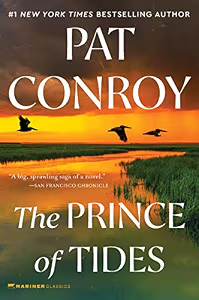
    Kelly and I spent a beautiful day at the the Decatur Book Festival a few weeks ago.  In addition to seeing an old friend, Ginnie Sams, a former member of The Emerson Drummers who was helping out at her sister’s booth, we attended Pat Conroy’s keynote talk at the First Baptist Church of Decatur.  Pat Conroy is a hugely successful author who’s had two novels, The Prince of Tides and The Great Santini, made into Oscar-nominated movies.  Moderating was Pat Conroy’s agent, Marly Rusoff, who was introduced by the founder of the DBF as “one of the most important names in American letters, although you probably haven’t heard of her.”  Joining them was another writer, Jonathan Odell, who is also represented by Ms. Rusoff.  Each writer took turns sharing their experiences with their difficult families, and what it’s been like for them to write honestly about surviving abuse and dysfunction in their families while growing up.

    They shared numerous anecdotes about their challenges and fears when facing their families’ reactions to what they had written.  Jonathan Odell told about his father’s cautioning him not to give the book to his mother, because she would have to go back into shock treatment if she read it.  Jonathan, it turns out, didn’t need to worry because his mother did not recognize herself in the book at all, and even wished she could have been the mother in the story.

    Pat Conroy shared that his long estranged daughter had recently invited him to dinner, and asked him not to allow the writing of two biographies which are being created about him currently because it was so painful to her.  She also shared that her therapist had told her not to have any contact with him because it would be too toxic.  Mr. Conroy assured her that he could not put anything before the needs of the expression of his art, and that the biographies would indeed proceed.

    While many in the audience laughed at the authors’ stories, Kelly and I looked at each other with a different understanding.  It was clear to us that much of the pain in the family soul has not been resolved for these men or their closest relatives.  For anyone who experiences an environment of abuse, disconnection, dishonesty or lack of nurturing in the family, it can be a lifelong task to overcome an identity of victimhood and a variety of defenses against the pain.  It’s hard work to soften the heart, yet it’s one way to create peace within one’s self.  It’s been surprising to me as I researched Pat Conroy’s life to see that he has experienced some reconciliation with his father, and I wonder why he didn’t share more of that in his talk.

    Setting up a family of origin Constellation and just looking at the dynamics of the family system can be a first step to opening our awareness to the depth below the mind, and what we know of our story.  It provides more of the hologram of who we are: not an isolated individual, but a soul that has chosen to be born to a specific set of parents, at a certain place, in certain conditions at a particular time- just as our parents and siblings made their choices.  By looking, we can open the door to the feelings that we’ve been protected from by our ego resistance.  

    With time and practice, in the respectful environment of a constellation, it’s possible to move past the resistance and move to the deepest level of understanding.  When we allow ourselves to feel the soul agreements we’ve made with our family members, we can move to a profoundly spacious and quiet experience of peace and stillness, where the deepest healing can take place.  We can begin to replace the no longer helpful inner image we hold of our place in our family with a new picture that allows our soul to feel liberation and compassion.

    [Originally published October 1, 2015]

  • Honoring Diversity in the United States

    Andre lives with his mother and 2 siblings.  His sister has a 2 year old baby.  He’s never known his father; his mother graduated from high school and works part-time as an aesthetician.  He works after school at a car wash and has just started the tenth grade.  ‘Dre hangs out with some friends who have recently begun smoking marijuana and who are being mentored by some men who are teaching them to break into houses.

    Estelle lives with her parents, her mother’s parents, her father’s brother, and 2 cousins.  Her father works 7 days a week painting houses and apartments and her mother cleans houses. Estelle has a boyfriend and is helping her parents learn to read and write English.  Her mother hopes Estelle doesn’t get pregnant before she’s 18.

    Jim lives with his parents and two siblings on their family farm.  His father has 100 acres of corn and soybeans, is able to pay his bills each month and constantly worries about managing loans and aging equipment.  Jim is a football star, works hard to get good grades and hopes to be good enough to get an athletic scholarship to college.  Some of his friends have started hanging out at parties where it’s rumored that kids are doing meth.

    Melanie plays volleyball, loves being in school musicals and volunteers at a senior citizen residence.  Her parents both have advanced college degrees and expect that Melanie will also.  Her father is having an affair, and her mother may be addicted to prescription painkillers.  Melanie thinks she will study biochemistry and eventually become a research scientist with the Centers for Disease Control working internationally to stop outbreaks of disease.

    From one perspective the lives of Andre, Estelle, Jim and Melanie look extremely different, yet they all belong to the same system.  They have different parents and have inherited different genetic material, histories, values, beliefs, hopes and expectations from their respective family lineages.  They were each born into a unique field of knowing to which they and their family members belong out of unconscious love and loyalty.  They are all U.S. citizens, and therefore share membership in that same system as citizens.  Imagine if they all attended the same school.  To what degree their families and school teachers describe this shared system will influence how they perceive and feel about each other as young people from a wide variety of backgrounds.  Even more important to the ways that they might feel about each other are the unconscious ways loyalty to their family of origin confers belonging and, at a deep primal level, survival.

    Perhaps you’ve wondered what life is like for another person.  In a hypothetical Constellations healing circle, each of these young people would take a turn setting up neutral representatives who would stand for their own parents and siblings as well as essential elements in their family lineage- religions, illnesses, countries of origin and so on.  Without words or processing, each person would feel and be witnessed in the holographic field of knowing of their family’s soul.  All the strengths and challenges would be acknowledged without judgment.  The opportunity might arise for each of the young people to literally stand in the place of a person or important energy in one another’s family, to experience what it was like for that person to move through life under some of the conditions of their specific inheritance without the need to change anything.  It’s possible that they would see each other as more similar than they expected, and begin to feel more understanding and compassion for one another.

    Growing up in the United States I often heard the phrase, “The United States is the greatest country in the history of the world,” many times from politicians.  It felt off-putting to me, as a boast meant to overwhelm others.  As I grew I came to see it as a possible cover for unexamined doubt.  Through the lens of Family Constellations I can also look at it now as an undefined signifier of belonging and loyalty; an unofficial pledge of allegiance.  One of the promises of the U.S. is to recognize and respect all men, women and children as equal and deserving of equal opportunities, regardless of their religion, nationality or beliefs.  If you’ve ever said the above-mentioned phrase or felt an agreement to it, I invite you to consider taking on the extra responsibilities a citizen of the US has to make it the greatest country.  Those responsibilities include being concerned enough for the well-being of every member to act in the interest of the common good.  This includes caring enough to know the lineage of every member of that family, and historically what has been your and your ancestors’ place in the stories of other families. 

    [Originally published September 1, 2015]

  • Marriage as Conscious Sacrifice

    Before Kelly and I were married, we spent some time considering what we were going to give up in order to make the commitment to be life partners.  This reflection was inspired by our training in Family Constellations, and our teachers Peter and Jamy Faust who reminded us that whenever we want to move into another stage of life, there will be great benefits but also a price to pay in what we would need to let go. Doing this exercise began to help us understand the deeper, spiritual purpose of marriage.

    The root of the word ‘sacrifice’ is, of course, “sacred”, and the short definition is “to make sacred.”  I have to admit that, even being raised as a Christian and Catholic, I was surprised to see the primary definition in various online dictionaries for ‘sacrifice’ related to the slaughter of animals or humans.  For myself, there is a deep imprint of bible stories with knives raised over animals and children on stone altars, but I have developed more personally meaningful associations with the word.  Still, I can’t imagine visions of guts and blood supporting a compelling advocacy of one of the most important experiences one can have in life.  Yet it’s important to consider this element of marriage more deeply.

    Kelly and I had both had significant periods of life where we were unmarried and free to create our lives the way we wanted.  We pursued educational opportunities, lengthy travel experiences, lived with roommates or alone, as we chose, and launched and developed career changes as we were inspired.  We both wished to continue living deeply rewarding, exciting, purposeful lives after being married, but we had to consider how our partnership would impact our choices to do exactly what we wanted, how and when we wanted to do it.  We had serious, sometimes hard conversations about where to live, what we wanted to create individually and together, when we would have children, and other important issues – and we continue to do so.

    Through sometimes very hard work, we’ve come to appreciate more how essential it is to be fully honest about what we each want, while simultaneously holding our love and respect for each other in the marriage as most precious of all.  This is not easy, to say the least.  Our human tendencies when in conflict often default to reactionary echoes of past wounds and the barely conscious ways we recorded the memories of how our parents created their relationship.  By continuing as best we’re able, to hold our marriage as the higher goal, it becomes a practice that teaches us deeper virtues of trust, full communication, respect and patience.  These are things that we want to cultivate anyway, but we sometimes imagine it might be better to do so without the inconvenient feelings partnership often evokes.  

    Another powerful thing we are learning through this practice is to trust the mystery of the spiritual purpose that brought us together and keeps us in the crucible of the process.  Holding this awareness reminds us that we are only in charge of some levels of our lives, and that by allowing time and space for the unfolding of certain questions, we sometime come to resolutions and outcomes we had not imagined.  We are learning to trust more that there are unconscious reasons we chose each other to represent the Beloved for our delight, our growth and our learning.  The riches of this knowing are the reward for giving up the less mature satisfactions of doing all the things we want, just how we want to do them.

    [Originally published August 11, 2015]

  • Healing Through Reconnecting What’s Been Separated

    In the work of Family Constellations Kelly and I often meet people who have, consciously or unconsciously, rejected some quality, tradition, or event from their family’s or their ancestors’ lives. It is a natural human tendency to choose what we find pleasant, acceptable, healthy and agreeable, and to push away what we (or society, or any group with which we identify) consider wrong or bad. When we do this at a young age it is usually a necessary part of our individuation, and even sometimes required for our physical or emotional survival. 

    The hard work of Family Constellations often lies in seeing, accepting, and coming to peace with all the parts of our family. By rejecting any part of the lives of our parents or ancestors, we may also cut ourselves off from the life force that came to us with our incarnation. This does not mean we condone crimes, injustice or abuse if they occurred. Instead, it gives us an opportunity to see more of the system in which a person lived, to begin to have compassion for what they carried in their heart and soul, and to have the strength to say, “My soul chose to incarnate into this family. There are lessons for me to learn from this which may bring me a better understanding of virtues like patience and humility, which can open my heart. I thank my parents and ancestors for my life and accept all that came with it. I honor the fate their souls chose, and I leave it with them. I will choose the way that is best for me.” This begins the healing work of reconnection to the source of the Divine. It is only by continuing to do this work with ourselves and our families that Kelly and I can begin to guide others to do the same.

    Imagine if you find in your adult years that your grandfather was a universally condemned Nazi commandant, featured in the movie Schindler’s list. This is what happened to Jennifer Teege, who has written a memoir about this discovery. I haven’t read it, but I plan to, and I also plan to hear her speak on Wednesday April 22nd at 7:15pm at the Decatur Public Library. She is currently promoting her book, “My Grandfather Would Have Shot Me,” and information on all of the cities in which she is appearing is found here:

    http://theexperimentpublishing.com/2015/03/us-tour-announcement-jennifer-teege-author-of-my-grandfather-would-have-shot-me/

    May we all learn to recognize the places we have judged and separated from particular aspects of our families, and may we come to resolution with all parts of the lives we have chosen to inherit. As we come to more peace, we can each contribute to the healing of the soul field of humanity.

    [Originally published April 17th, 2015]

  • Illness, Balance in Family Systems, and Ebola

    “Let no one… persuade you to cure the head, until he has first given you his soul to be cured by the charm. For this is the great error of our day in the treatment of the human body, that physicians separate the soul from the body.” -The Dialogues of Plato: Charmides

         One of the higher perspectives on illness or dis-ease holds that any disturbance in physical, emotional or spiritual health brings a gift of awareness hidden within it. For example, a fall that leads to a sprained wrist may lead to a sudden change in a person’s lifestyle and a slowing down of activities. Sometimes such an unexpected yet necessary reassessment of priorities reminds us of the value of space and reflection in our lives, and of the benefit from filling our soul with what it needs, rather than filling our calendar with appointments.


         Medical intuitive Carolyn Myss has said, “Illness can develop as a consequence of behavioral patterns and attitudes that we do not realize are biologically toxic until they have already become so.” Emotions that are held unexpressed, or emotions that move in habitual unbalanced ways may eventually lead to physical illness that shows up in a related organ or part of the body. Anger as a reflexive response may lead to diseases of the liver, stomach or spleen, whereas ongoing anxiety and stress which cause one to chronically hold their breath may result in issues in the lungs. These signs of illness may be signals that lead a person to evaluate how they create relationships, how they satisfy their needs for creativity and a purposeful life, what resentments they may be carrying that need to be released, and to what unconscious responsibilities they are being loyal.

         As symptoms of illness can work to signal to something that lies deeper within an individual, so do they serve a purpose in an organization, a group, a nation or a family. When there is an imbalance in the natural orders which serve the flow of love and respect for all members in a family, the fullest measure of well-being that might be present will be restricted. This is one of the most powerful principles of Family Constellations: to see every person not in isolation, but holistically, as part of a larger group, and inextricably woven into the pattern of a family soul. What we have seen many times in this work, both for ourselves and with clients, is how the unconscious loyalty of a child will guide him or her to want to restore balance and love in the family, whether or not they are capable or responsible for doing so.

         To give one example: a girl dies in a childhood accident, and a surviving brother feels guilty for living on. The brother may keep himself small in life believing he is honoring the lost child, and may even unconsciously, out of blind love, feel it would have been better if he had died instead. After growing into adulthood it is logical that the family would have found ways to move on, and the loss would have been integrated as part of the past- yet the brother struggles to thrive. By giving the deceased child a respected place through a Constellation with representatives of the whole family, the brother can see that it is not his job alone to heal the wound, but the responsibility of the entire family together to grieve and remember the sister, and always give her a place in their hearts. It is then that the brother might learn that doing something good with his life is the best way to honor his dead sister.

         Until it is healed, the brother’s depression and failure to succeed will act as signals to the family system that something remains out of balance in the family soul. The disturbance may even act transgenerationally, with a descendant representing a family member who suffered a difficult fate in a previous generation that they never even knew. Each family grieves loss and trauma the best they can with the resources available; there is no right way. Family Constellations gives us the opportunity to consciously acknowledge, accept, and even agree to all the threads of our family soul in order to heal what remains in out of good order.

         At the soul level, the Ebola virus may be acting as a signal to all humanity that something remains in disorder. Perhaps we need to learn that there is enough available to satisfy all of our needs, and we haven’t yet learned to make it the highest priority to share what we have with those who have less. In our beginner-level studies of the Jewish mystical tradition of Kabbalah, we have learned that there is a blessing in everything, and we can’t know the divine from the limited level of our human consciousness. It’s very hard to think of Ebola holding a blessing for the friends I met in West Africa. It’s a horrible affliction and one that creates fear as there is no cure. Treatment resources are extremely limited where it is having the biggest impact. I hope that one of the blessings possible from the outbreak of the virus comes from all of humanity being brought together to learn again that we are all similar as human beings; that we all need good food, clean water, and healthy environments in which to raise children; that we all carry deep soul memories of being both victims and perpetrators; and that by taking these threads of consciousness into our hearts we can transcend the limits of vengeance and justice and bring the cycles of interpersonal, intertribal, and international violence to an end.

    Darkness cannot drive out darkness: only light can do that. Hate cannot drive out hate: only love can do that. -Martin Luther King Jr.

    [originally published October 16th, 2014]

  • The Three Levels of Healing

    In the practice of Family Constellations, the levels of consciousness that are navigated in order to reach the deep healing possible at the soul level are:

    Acknowledgement

    Acceptance

    and Agreement.

    We start at the mental level, with what we know: what has happened, and with whom.  This is the beginning level of Acknowledgement.  Stating and facing what is true allows for deeper connection to the body and the emotional level.  It allows us to feel the strength that resides in truth.  For some people who have defended against a painful experience they’ve had, this movement may be enough for healing to begin.  Acknowledgement takes place at the mental level, and may be enough to lead to the next stage.

    By dropping to the emotional level, a new space may be created to release what has been stuck in the energy field.  One may now be able move into the more fluid level of Acceptance, which will let us begin restoring to ourselves the vital life force energy we’ve invested in resistance.   Reaching acceptance doesn’t condone any harm that was done; the responsibility for that is left with the perpetrator.  However, it can allow us to begin releasing something that has been familiar but unconscious: the child’s wish that things had been different.  Letting go of that wish helps us move into more adult strength and understanding, which leads to more compassion for ourselves and others.

    Beyond the emotional level, there is still another experience where deeper healing is available.  This is where the Soul Agreements are found.  We may be able to take adult responsibility for having taken a place in the family, and for the relationships we have or had with each member.  Although it’s a mystery, there were lessons our soul wished for us to study for our individual evolution- to learn patience, kindness, generosity or other qualities.  Perhaps we came to balance a karmic debt.  This level is usually wordless.  When you’re ready, the experience may be one of stillness and peace, and an understanding that surpasses the knowing of the mind.  

    By looking at this material with the guidance and support of an experienced facilitator, you may be able to see that it’s out of a child’s pure, innocent love you’ve wanted to fix something that’s not your responsibility, and is impossible to change anyway. This sacred practice can help you come to more understanding and more compassion for what your ancestors lived with and struggled through while still having enough strength to pass life on to another generation and ultimately to you.

  • First Wife, Second Husband:

    Respect for the one who had a place


    In the practice of Family Constellations, there is a simple teaching about honoring our former spouses.  Rather than use the term “ex-wife” or “ex-husband,” we say “first wife” or “second husband.”  It’s more respectful, and it acknowledges the truth; that this person for a time had an essential place in our lives before the relationship ended.

    If we have married again, there’s another way it’s important to honor the previous spouse. Without their leaving, there would not be a space for the one to whom we are committed now. The former spouse left a space for someone new.

    This conscious change in language reminds us how important it is to recognize the essential role our previous spouse played in the growth of our own soul.  It was difficult for them, as well, to go through the pain and disappointment of separation and divorce.  They held a place for us to learn more about ourselves. They created opportunities for us to make new and different choices.  It also helps us accept and take responsibility for the part we played in starting, building, and ending the relationship.  This is especially important when there are children from the marriage, as it models more respectful and mature behavior for them.

    If you were in a long or meaningful relationship but not married, you might say “former partner” or “former girlfriend,” rather than using “ex-.” This helps to avoid any subconscious wish to erase the experience of having been in intimate relationship with the person, and potentially miss the growth and learning your soul aimed you toward.

    If you feel resistance to this change in terms, it might be a sign that you haven’t come to peace with that person and all the things that happened. You might risk carrying that wound and the defenses that grew around it into another relationship, and limit how freely you’re able to accept and love another partner.

  • Hello world!

    Welcome to WordPress. This is your first post. Edit or delete it, then start writing!